

What People Don't Tell You About Adoption
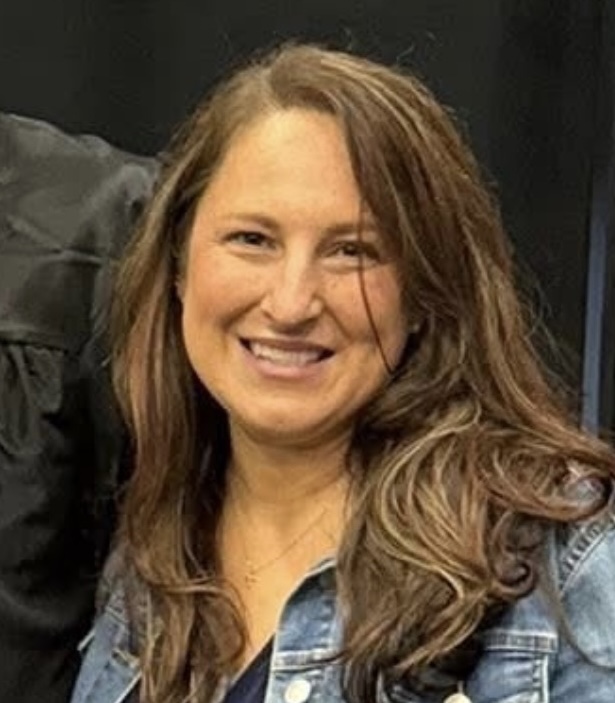
When people hear that I'm an adoptive mom of six, they often assume we always planned on having a big family.
We didn't.
We had three biological children and truly believed our little family was complete. Life was busy, full, and good.
But for nearly two years, there was this quiet, persistent tug on our hearts. It wasn't dramatic or life-changing or all at once. It was simply a feeling that maybe our family wasn't quite finished. We couldn't seem to shake the idea of adoption.
Eventually, Joe and I stopped saying “one day" and decided to take the leap. Our plan was simple. We were going to adopt one child.
But life had other plans.
My career had already been rooted in the foster care system. I spent years teaching independent life skills to teens living in group homes. I worked as a case manager with kids in foster homes and group homes. I helped youth navigate the juvenile justice system. I completed home studies, recruited foster families, trained foster parents, and saw firsthand the incredible need for safe, loving homes.
I knew the statistics.
I knew the policies.
I knew the stories.
I knew about the trauma, the hurt, and the baggage.
Or...at least I thought I did.
When Joe and I decided to adopt from foster care, we weren't trying to "save" anyone. We weren't looking to be seen as heroes or saints. We simply believed every child deserves the stability and permanence of a family, and we wanted to provide that for a child who needed a forever home.
Then, on a cold December day just after Christmas, our lives changed.
Overnight, we went from a family of five to a family of eight.
We became the parents of a sibling group—ages 7, 5, and 2. Our biological children were 9, 7, and 5 at the time.
In the blink of an eye, we had six children, all between the ages of 2 and 9. Nothing can truly prepare you for that.
Not the training classes.
Not the books.
Not even my years working in the foster care system.
Nothing.
Because overnight, it wasn't just three more beds to make or three more mouths to feed. It was learning three more different personalities, three additional ways of communicating, and navigating six different sets of needs, fears, and strengths. It was figuring out how to help children who had experienced trauma feel safe while also making sure our biological children continued to feel seen, secure, and loved through this enormous transition.
Our family didn't just grow — In that moment, every part of our lives changed forever—and so did our understanding of what it truly means to become a family.
People often think about the obvious challenges— grocery bills doubling, endless mounds of laundry, the need for more seats in a vehicle, and the noise. And those things are indeed very real.
But what people don't talk about or ask about is learning how to parent six children who all need something different.
It’s learning that one child responds best to structure, while another needs connection before correction. One thrives in the spotlight, while another struggles when plans suddenly change. One takes words very literally and doesn’t always understand sarcasm, while the others can’t quite figure out why Mom seems so irritated some days.
It’s learning that the same parenting strategy rarely works for every child. What helps one child flourish may completely miss the mark with another. Every child is different, and every child deserves to be understood for who they are.
It's juggling more parent-teacher conferences, homework help, counseling appointments, doctor's visits, and after-school activities than you ever imagined.
It's watching sickness spread through six children like wildfire and wondering if your washing machine will ever recover.
Spoiler alert: it won't!
It's learning that "fair" doesn't always mean "equal."
It's realizing that parenting children from hard places often means throwing out everything you thought you knew about discipline, behavior, and success.
Those are the parts we weren't prepared for.
Ironically, the adoption process itself was actually one of the easiest parts.
Legally, our adoption happened remarkably quickly. At the termination hearing, the biological parents voluntarily surrendered their parental rights, and no additional family members came forward seeking placement.
And during the early part of the process, we discovered something none of us expected. While tracing our family genealogy, we learned our children are actually distant relatives. What began as strangers becoming family turned out to be family finding family all along. Life has a funny way of writing stories we never could have imagined.
Over the years, I've had countless conversations with people who tell me they'd love to adopt—but only a baby. They tell me they could never adopt an older child or a teenager.
The reason is almost always the same.
"They've been through less."
I understand why people think that. And in some ways, it's true.
A baby has simply had fewer days to experience neglect, abuse, instability, or loss than an older child.
But here's what people often misunderstand.
Trauma doesn't measure itself by birthdays.
An infant who experiences disrupted attachment, prenatal substance exposure, chronic stress, neglect, or inconsistent caregiving still carries those effects for years, sometimes a lifetime. Those first months of life are some of the most vital periods of brain development.
An older child may remember what happened to them. A baby may never consciously remember.
But the body - it always remembers what the mind cannot.
That's one of the things people don't talk about enough.
Another thing we don't talk about enough?
The children who wait the longest for a family are often the ones who need one the most.
Older kids make up one of the largest groups of youth waiting to be adopted from foster care. Many will spend birthdays, holidays, graduations, and eventually adulthood without ever experiencing the permanence of a family—not because they're less deserving, but because they're not babies.
My heart breaks for those kids. They don't stop needing parents because they've become they are older.
If anything, they need them more - they need committed, caring adults as they prepare to navigate teen years and adulthood.
Love is essential. But love doesn't erase trauma.
Safety doesn't instantly restore trust. A forever family doesn't immediately quell fear. Healing isn't measured in days, months, or even years. It's a journey. And it's a long one.
Adoption is beautiful. But it's also incredibly hard.
And those two things CAN absolutely exist at the same time.
What people don't tell you is that adoption doesn't end a story.
It begins one.
A story of trust being earned. Healing happening slowly. Mistakes, forgiveness, growth, laughter, setbacks, and love showing up over and over again—even on the hard days.
Being their mom has changed me.
It has changed the way I parent.
It has changed the way I lead.
It has changed the way I work with young people.
Today, when I work with teens and young adults, I see them differently than I did 15 years ago. Because now I know every behavior tells a story.
Every child carries experiences we cannot see.
Every young person is fighting battles we may never fully understand.
I've learned to ask, "What happened to you?" before asking, "What's wrong with you?" And that simple mindshift changed everything.
Our family wasn't built the way we imagined.
It was built through unexpected twists, difficult seasons, overwhelming joy, heartbreak, healing, and a whole lot of grace.
I wouldn't have written our story this way. But, I wouldn't change it either.
Because somewhere along the journey, I realized something I never understood when I worked in foster care:
Children don't just need a home. They need people willing to grow alongside them.
And in the process, those children often transform the adults who thought they were doing the rescuing.


Comments